Delayed Delivery of Off-Plan Housing: Should the Consumer Rescind the Contract or Claim Rental Loss?
When an off-plan home's delivery is delayed, should a consumer rescind the contract or claim rental loss? A guide under Turkish consumer law.
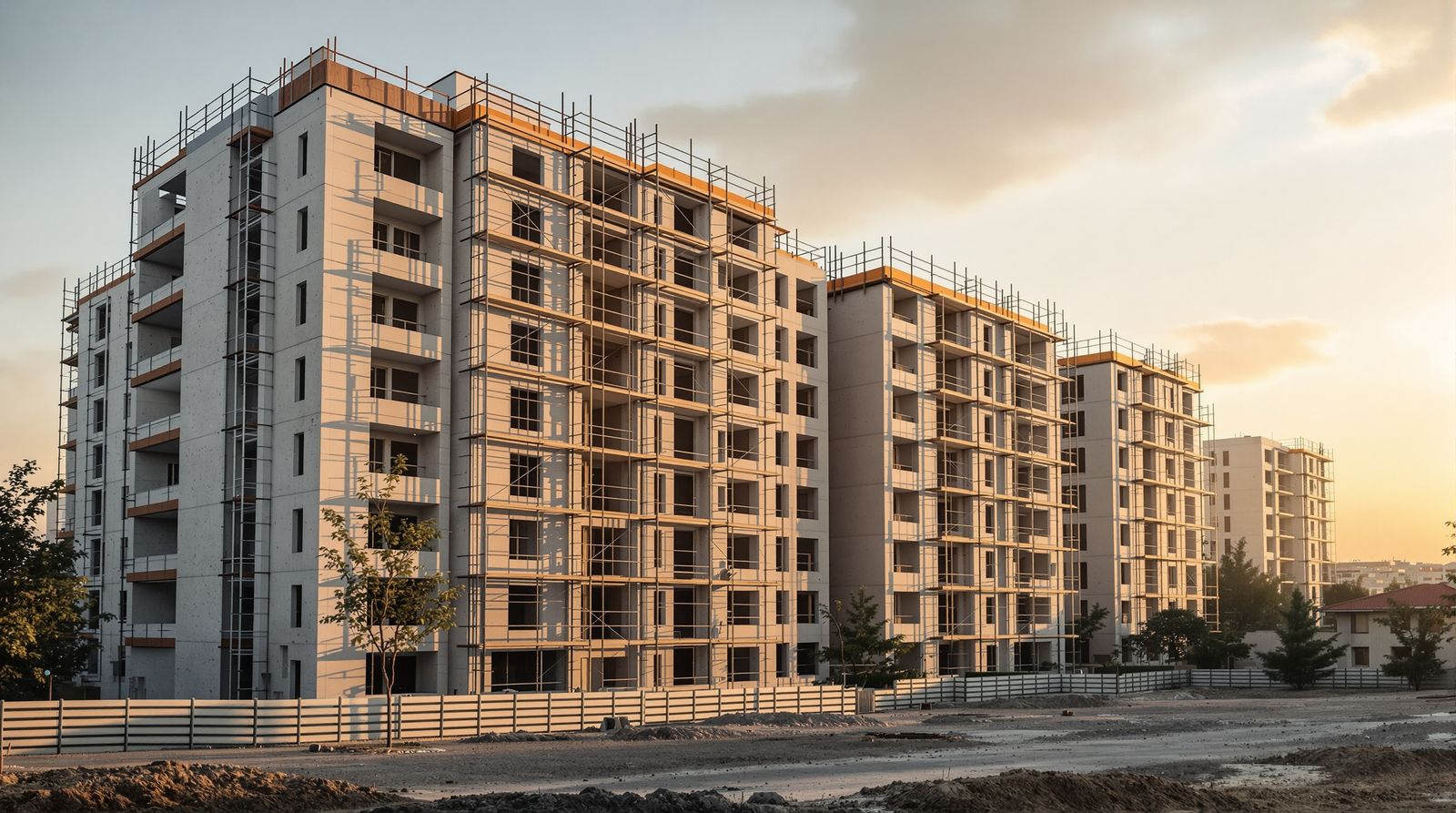
When the delivery date passes in a pre-sale (off-plan) housing purchase, the consumer essentially has two options. Either keep the contract in force and claim compensation for losses caused by the delay, such as rental loss, or rescind the contract and demand a refund of the amount paid. Under Law No. 6502 on the Protection of Consumers, the delivery period for the housing unit may not exceed 48 months from the date of the contract.
When delivery of a pre-sale housing unit is delayed, the consumer may keep the contract in force and seek both delivery of the unit and compensation for any loss caused by the delay, where the conditions for this are met, or may rescind the contract and claim a refund of the amount already paid. It would not be accurate to say that these claims can never be raised together in the same lawsuit: the consumer may plead rescission and refund as the principal claim, with continuation of the contract and delay damages as an alternative claim. As a rule, however, a refund based on termination of the contract cannot be granted together with rental loss for the same period as though the contract were still in force.
Why is this so contentious?
In practice, consumers often start out expecting either to "get the flat and also recover the rent" or to "get the money back and also collect the rent difference." The legal system cannot satisfy both expectations at once, because one rests on the contract continuing and the other on its termination.
This is exactly where the debate begins. Some approaches treat rescission as the definitive remedy. Others argue that the consumer may still claim the rental loss suffered while waiting for the unit even after rescinding. This article takes the position that the choice should first be made according to the consumer's actual needs.
Legal basis
Under Article 44 of Law No. 6502, a pre-sale housing unit must be delivered within the period undertaken in the contract and, in any event, no later than 48 months from the date of the contract. If registration of the easement of floor ownership (kat irtifakı, a form of preliminary title registration) in the consumer's name is accompanied by a transfer of possession, the law also allows delivery to be deemed to have taken place.
Article 45 of the Law grants the consumer an unconditional right to rescind, without giving any reason, within 24 months of the contract date. Where the seller fails to perform its obligations at all or fails to perform them properly, the consumer cannot be charged any fee for exercising this right of rescission. The refund must be made within 180 days at the latest from the date the rescission notice reaches the seller. For this reason, the time limit for the right of rescission, any applicable suspensions, and the refund timeline must all be assessed together.
The general provisions on default also apply in cases of delay. Article 125 of the Turkish Code of Obligations (TBK) No. 6098 grants the creditor alternative remedies where the debtor is in default. The creditor may demand performance together with compensation for the delay. Alternatively, the creditor may give up the claim to performance and instead claim damages for non-performance of the contract. The creditor may also rescind the contract and claim damages on the basis that the contract is treated as if it had never been concluded. The concept of rental loss falls within the first remedy. The alternative remedies under Article 125 TBK must be assessed in light of the debtor's default and the legal path chosen by the consumer. Claiming performance together with delay damages is different from claiming damages tied to termination of the contract through rescission.

Option one: Keeping the contract in force and claiming rental loss
Consider a couple with children in Ankara who, in 2024, have largely completed payment for a flat and are now waiting for its delivery. In the meantime, they continue living under a lease. The rent the consumer actually pays and a market-rent calculation based on the inability to use the unit are two different types of damage claims. Which item is being claimed, for which period, and in what amount must be substantiated with documents, and the same period must not be counted twice.
Option two: Rescinding the contract and recovering the amount paid
Consider an investor in Istanbul who signed a contract in 2022 for a project where construction has now been stalled for months. There are no workers on site, and there is uncertainty surrounding the permitting process. In this scenario, the risk that the unit will never be delivered at all is a more serious problem than rental loss.
Rescission secures a refund of the amount the consumer has paid. In periods of high inflation, however, the gap between the purchasing power of the refunded amount and the current market value of the same unit widens quickly. The consumer may no longer be able to buy the same unit at the same price. For this reason, the decision to rescind should be weighed together with the project's actual state of progress.

Can rescission and rental loss be claimed together?
Claiming rescission and rental loss together must be examined by clarifying which period the rent claim relates to and what type of loss it represents. In a case where it upheld rescission together with a refund of the amount paid, the Court of Cassation (Yargıtay) affirmed the rejection of the rental loss claim on the ground that rent could not be claimed as though the contract were still in force. That decision concerned a case decided under the former legislation, so it should not be presented as an automatic outcome for every rescission-and-damages claim.
A further distinction must be drawn between pleading claims in the same lawsuit as a principal claim and an alternative claim, on the one hand, and demanding mutually incompatible outcomes together, on the other. Whether losses alleged to have arisen before rescission can be claimed separately must be assessed according to the nature of the loss, the timing of the rescission notice, and how it is proven.
What should be considered before deciding?
Before making a choice, the consumer should review the following points.
- The physical state of the project. Is construction progressing, and what is the status of the building permit and construction supervision?
- The delivery date set out in the contract, and any penalty clause for delay.
- The proportion of the price already paid. How much has been paid, and how much remains?
- The need for the unit. Was it bought to live in, or as an investment?
- The seller's financial standing, and the actual collectability of any amount to be refunded.
For a family currently living as tenants, for instance, a further few months' delay in delivery is a very different risk from the project coming to a complete halt. The same delay carries a different meaning for someone who bought the unit purely as an investment. A legal choice that terminates the contract, moreover, may not be reversible afterward. A similar discussion has been made with respect to rescission in build-to-share-title (kat karşılığı) construction contracts.
Conclusion and a practical sequence
The sequence should run roughly as follows. First, the contract and payment records should be gathered and the date of delay established. Next, the project's actual condition should be verified. The consumer should then determine which path best fits their needs and risk tolerance. Which forum to apply to depends on whether the dispute falls within the jurisdiction of the Consumer Arbitration Committee (tüketici hakem heyeti). Where a lawsuit must be filed before the consumer court, applying to a mediator before filing suit is, subject to statutory exceptions, a mandatory precondition to litigation.
In short, keeping the contract in force and claiming rental loss is the sounder approach when delivery is close and the unit is genuinely needed, whereas rescinding the contract is more appropriate once the project has fallen into real uncertainty. The critical point is to make this choice deliberately, without blending the two remedies together.
Legal Disclaimer
Practice area: Consumer Law